 Sagar
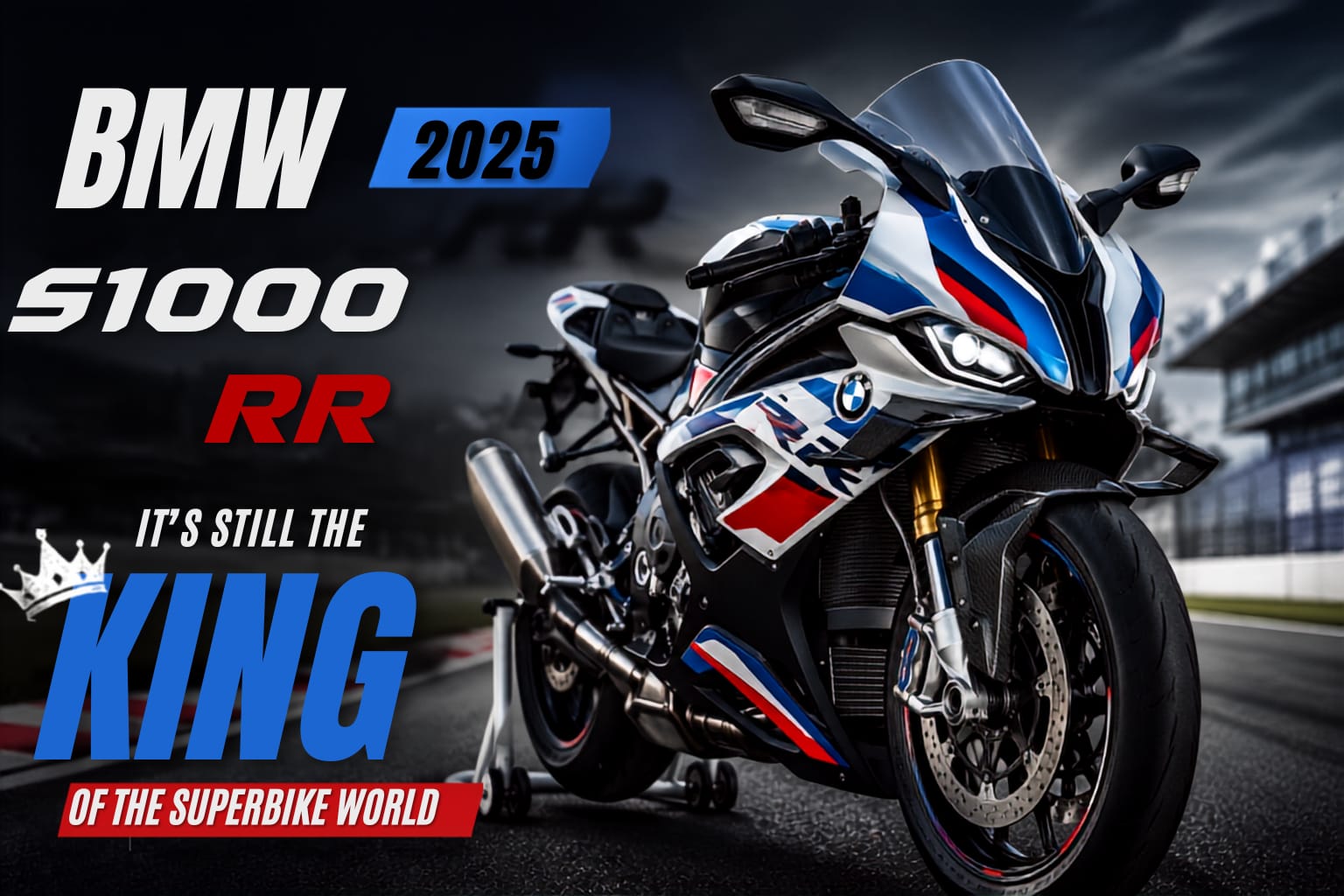
Sagar It’s Still the King
of the Superbike World
Before 2009, there was a consensus in the motorcycle world that felt almost geological in its permanence: if you wanted the finest litre-class superbike, you bought Japanese. Honda, Yamaha, Kawasaki, and Suzuki had built and refined the open-class superbike over decades until the machines they produced were so good that the idea of a meaningful challenger from anywhere else felt academic. Ducati had its passionate advocates and its racing trophies. But four Japanese brands effectively owned this segment.
Then BMW turned up with the S1000RR. It was equipped with ABS and traction control — two firsts for the class. At launch it had 193 bhp with a wet weight of 204 kg. That was up against the likes of the Yamaha R1 (191 bhp), the Suzuki GSX-R1000 (182 bhp), Kawasaki ZX-10R (188 bhp), and Honda Fireblade (175 bhp). BMW had declared war on Japan’s finest from a standing start, and the result wasn’t close. The S1000RR didn’t just match them — it embarrassed them, particularly in electronics sophistication and overall balance.
Sixteen years later, the 2025 BMW S1000RR arrives with revised aerodynamics, an upgraded throttle system borrowed directly from the homologation-special M1000RR, Pro Riding Modes now standard, and continued dominance of the sales charts in every major market where it’s sold. This is not nostalgia. This is a motorcycle that has earned every superlative attached to it. Here are twelve reasons why it continues to set the standard in 2025.
The Machine That Changed Everything — How BMW Rewrote the Superbike Rulebook in 2009
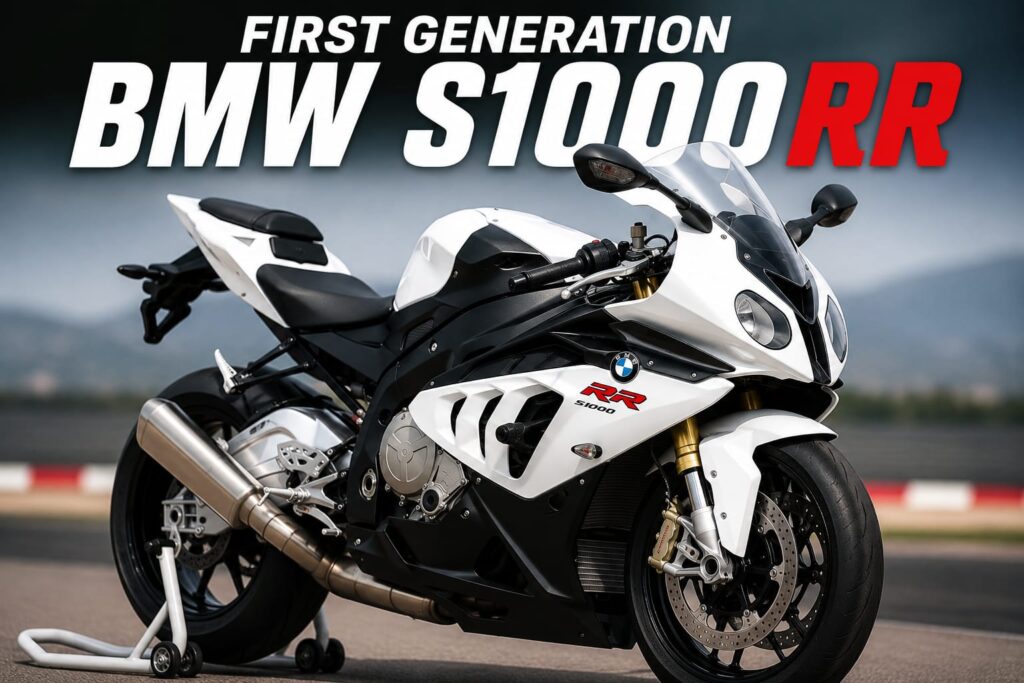
The story of the BMW S1000RR begins with a bold decision and a clear goal. BMW initially intended the S1000RR to be primarily a racing model — at least for the first year — to qualify for World Superbike Championship competition, for which 1,000 road-going examples had to be built. That homologation requirement produced a machine so accomplished that the road bike version overshadowed the racing programme in terms of lasting cultural impact. It entered full production in 2009 and immediately raised the bar for production sports bikes.
What BMW achieved in 2009 was remarkable in its context. The company was, at that point, known for boxer twins, big adventure bikes, and sport tourers. Nothing in its range came remotely close to a litre-class superbike competitor. The development team’s target was a motorcycle with 1000cc performance in a 600cc-size package — lighter, more compact, and more electronically advanced than anything currently available. They delivered. And critically, they didn’t just deliver a machine that matched the Japanese competition on paper. They delivered a machine that, in real-world riding conditions, felt superior to any of them in handling precision, electronic rider aids, and overall composure.
Many will argue that, despite the lack of outright title success in World Superbikes across its full history, the BMW S1000RR has been the best 1,000cc superbike since its introduction in 2009 — certainly it has been the biggest-selling superbike for several years running in some countries. That sales dominance — outselling direct competitors by double in some markets — is not built on marketing. It’s built on the fact that riders who ride these motorcycles don’t want to ride anything else.
Historical context: Before the K1200S appeared in 2004, BMWs were uniformly too fat and underpowered to hold a candle to the mainstream in terms of performance bikes. In just five years, BMW went from having no relevant superbike to producing arguably the most technically accomplished litre-class machine on the market. That transformation remains one of the most remarkable corporate engineering achievements in modern motorcycle history.
ShiftCam Variable Valve Timing — BMW’s Masterstroke That Rivals Still Haven’t Matched
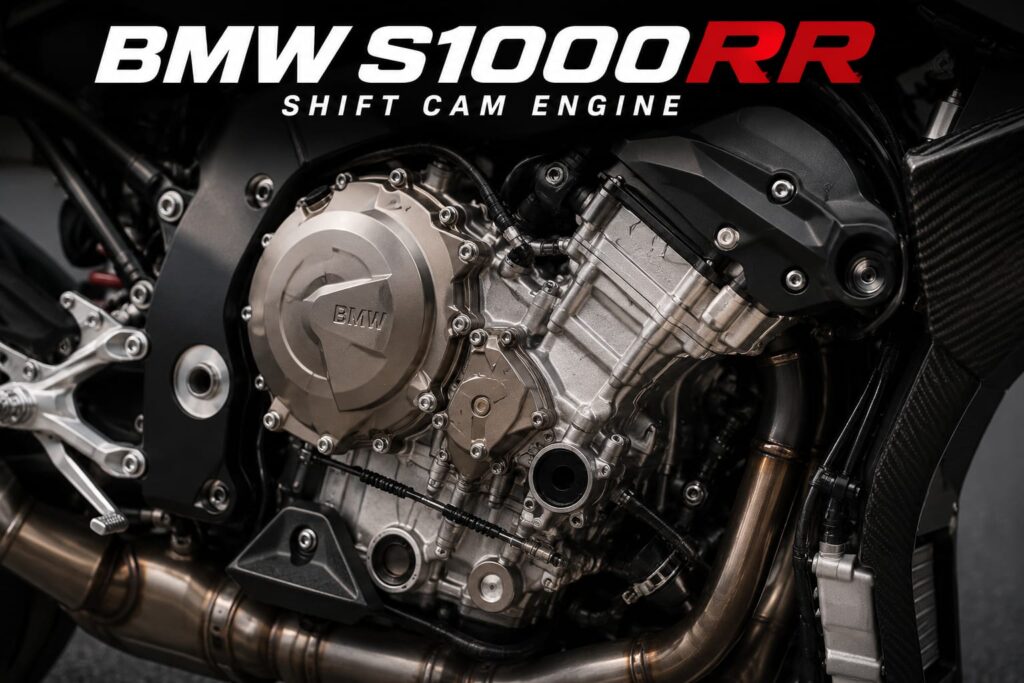
The 999cc inline-four engine in the 2025 BMW S1000RR produces 205 hp at 13,000 rpm and 83 lb-ft of torque at 11,000 rpm. Those numbers are competitive at the sharp end of the litre-class segment, but they don’t fully explain why this engine feels different from any other 1,000cc superbike motor. The difference is BMW ShiftCam — a variable intake camshaft timing system that changes the engine’s fundamental character based on how hard you’re riding.
ShiftCam works by using two different cam profiles on the intake camshaft. At lower engine speeds and partial throttle, the engine uses a cam profile optimised for street riding — broader torque delivery, smoother power response, more tractable behaviour in traffic and on twisty roads. When the rider demands full performance above a certain rpm threshold, ShiftCam switches to the high-performance cam profile, unlocking the engine’s full top-end power. The transition is seamless — you don’t feel a “step” in the power delivery; you feel a progressive, relentless build from low revs to the redline. Thanks to ShiftCam, there is also plenty of pressure in the lower rev range while maintaining the explosive top-end character that litre-class riders demand.
The practical significance of ShiftCam for American riders is meaningful. A traditional litre-class superbike engine is extremely aggressive at low rpm — snappy, peaky, demanding. The S1000RR’s ShiftCam engine is not. Very linear power delivery makes it particularly controllable and gives the bike a wide rev range and pleasant control from normal street speeds. This is why the S1000RR is genuinely suitable for experienced riders who want to use it on the street — not just experienced track riders who can manage a raw, aggressive superbike power delivery at all times.
For 2025, the engine received new M1000 full cylinder head porting along with revised valve springs and a new 58° quick-action throttle replacing the previous 72° unit. The reduced throttle rotation means more precise throttle inputs translate faster — at high speeds and high revs, the difference between 58° and 72° of throttle travel is the difference between nuanced control and slightly blunt responses. This change, adopted directly from the homologation-special M1000RR, gives the standard S1000RR a sharper, more responsive feel without sacrificing the linear delivery that makes it civilised on the street.
Displacement: 999cc Inline-4Peak Power: 205 hp @ 13,000 rpmPeak Torque: 83 lb-ft @ 11,000 rpm0–100 km/h: ~3.3 secondsTop Speed: 299 km/h (186 mph, limited)Technology: BMW ShiftCam VVT
50.9 lbs of Downforce at 186 mph — New Winglets That Match the M1000RR
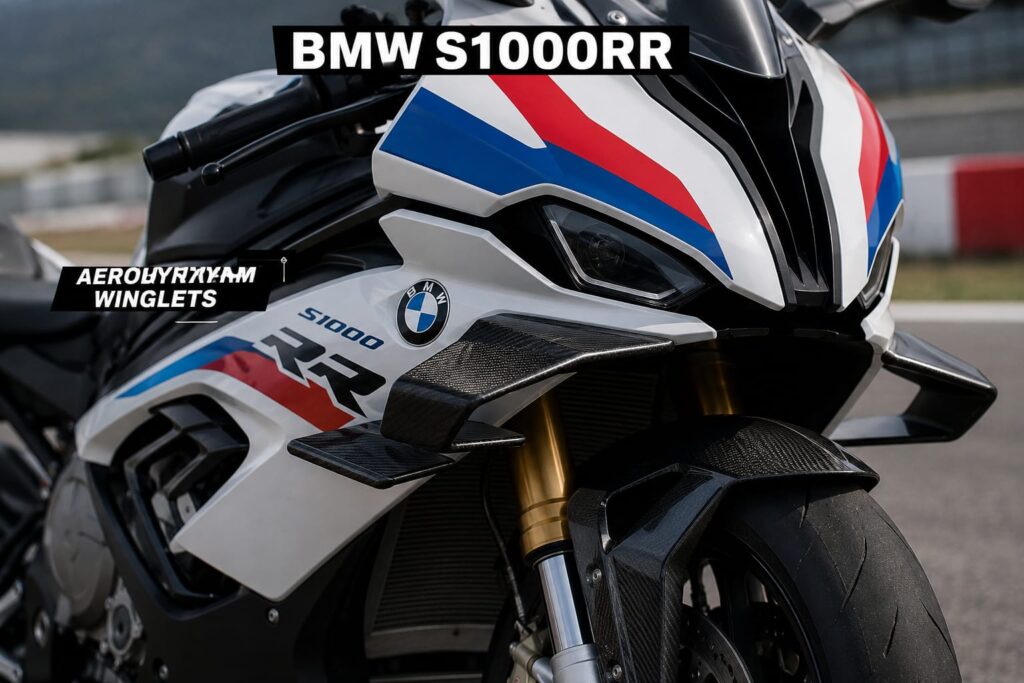
The most visually striking update to the 2025 BMW S1000RR is the aerodynamics package. Redesigned side fairings with new M-specification winglets now generate 50.9 lbs (23.1 kg) of downforce at 186 mph — a figure that matches the M1000RR homologation special and represents a significant increase over previous generation S1000RR winglet performance. The biplane winglets provide 37.7 pounds of down thrust at 186 mph in earlier specifications; the 2025 upgrade pushes that to 50.9 lbs, representing a meaningful 35% improvement in front-end load at top speed.
This matters enormously for high-speed riding and track use. At 186 mph, without aerodynamic downforce, the front wheel of a motorcycle is fighting against lift — the same aerodynamic force that pushes the nose of an aircraft upward. The S1000RR’s winglets counteract that lift, pressing the front wheel toward the tarmac with over 50 lbs of force. The practical experience is a front end that stays planted, steers with precision, and communicates confidently through the bars at speeds where less aerodynamically developed motorcycles feel uncertain.
The 2025 update also adds new brake cooling ducts integrated into a redesigned front wheel cover. These ducts direct airflow directly to the brake calipers — a feature adopted from the M1000RR race homologation programme. Brake fade under repeated hard stops on a circuit is a genuine performance limiter for track day riders; cooling the calipers reduces operating temperature, maintains consistent brake pad compound performance, and provides a more repeatable brake feel across consecutive braking zones. This reduces the brake temperature during track use and provides more consistent brake pressure — a track day improvement with measurable, tangible benefit.
Aero context: Every body panel on the BMW S1000RR has a precise aerodynamic purpose without adding needless weight. Starting at the front, the ventilated front fender directs airflow over the front forks and into the radiator grille, where it is further directed into laminar flow by the remaining bodywork. The 2025 winglet revision is the latest chapter in a coherent aerodynamic development programme that BMW has been running since the first generation RR.
The M Chassis Kit and DDC Dynamic Damping Control — Precision to the Millimetre
The chassis architecture of the 2025 BMW S1000RR is built around a philosophy that BMW engineers describe with a phrase worth noting: “accuracy to the millimetre for our highest level of precision.” The M chassis kit — with raised rear end and adjustable swingarm pivot — is standard across the S1000RR lineup, not an option reserved for the top-spec variant. Frame recesses in the main chassis allow lateral flex in specific, engineered ways that communicate road surface information to the rider. The flat steering head angle and the offset of the fork bridge provide precision at the front wheel that experienced riders immediately notice when transitioning from less developed alternatives.
Dynamic Damping Control (DDC) is the suspension system that makes the S1000RR’s chassis feel genuinely different from any other motorcycle in its class. DDC uses electronically controlled dampers that continuously adjust compression and rebound rates based on the bike’s dynamic state — lean angle, speed, acceleration, and braking force. The system reads these parameters and adjusts the dampers every few milliseconds, providing track-worthy stiffness when the bike is pushed hard and street-appropriate compliance when it’s not. The damping of the DDC in Road, Dynamic, and Race modes with Race Pro 1 to 3 means you can ride on country roads with street damping and switch to full race calibration with a button press.
The S1000RR is one of, if not the sharpest litre superbike on sale today, with a chassis and suspension setup that will swallow anything thrown its way. It feels like a well-sorted track machine as standard, with incredible poise and precision. The feedback through the suspension and chassis is truly incredible too. For American riders who attend track days regularly, this is the chassis that sets the reference point against which everything else is measured.
- DDC Dynamic Damping Control (standard with M Package)
- Electronically adjustable compression and rebound on both front forks and rear shock, continuously recalibrated based on riding dynamics. Offers three primary modes (Road, Dynamic, Race) plus three Race Pro sub-modes for track calibration. Eliminates the manual setup requirement for different riding conditions.
- M Chassis Kit with adjustable swingarm pivot (standard)
- The swingarm pivot adjustment allows precise geometry tuning — changing the pivot position affects anti-squat behaviour under acceleration and overall handling balance. Having this as standard equipment on the production S1000RR gives track-day riders factory-level chassis tuning capability without expensive aftermarket modifications.
- Upside-down front fork with adjustable rebound, compression, and spring preload
- Fully adjustable front suspension on a production superbike is standard, not optional. The fork setup is calibrated specifically for the S1000RR’s weight distribution and ShiftCam engine delivery characteristics — not adapted from another model in the BMW range.
- Race ABS with standard cornering capability
- The ABS Pro system uses a six-axis IMU to provide cornering-sensitive ABS calibration. Unlike basic ABS systems that can destabilise a motorcycle during mid-corner braking, the S1000RR’s ABS accounts for lean angle, adjusting braking pressure to maintain stability without losing stopping power. In Race mode, intervention is minimised while maintaining safety margins.
Pro Riding Modes Now Standard — the Most Complete Electronics Package in Production Superbikes
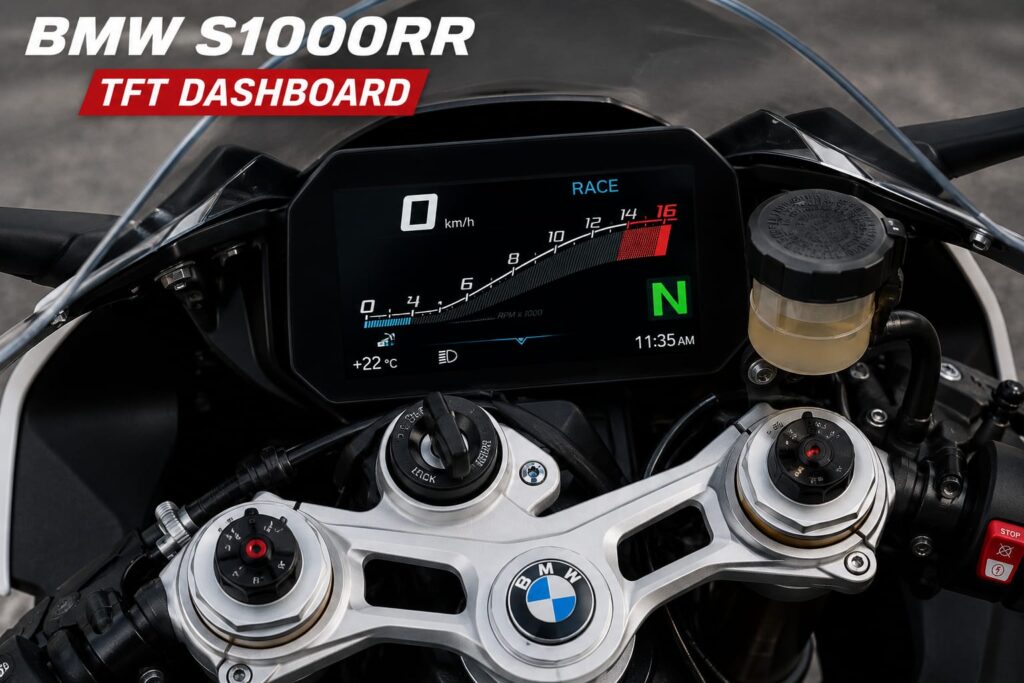
For 2025, BMW made Pro Riding Modes standard across all S1000RR variants. This is significant because Riding Modes Pro previously required an additional option package — buyers had to know to ask for it and pay extra. Now every S1000RR leaves the factory with the full electronics suite that transforms this motorcycle from a powerful machine into a genuinely intelligent one.
The full electronics package includes: Dynamic Traction Control (DTC) with slide control, ABS Pro (cornering-sensitive), Dynamic Brake Control (DBC), Engine Brake Control (MSR — prevents rear-wheel lockup during aggressive downshifts), Pit Lane Limiter, Launch Control, and the complete Riding Modes system with Road, Dynamic, Race, and three configurable Race Pro modes. Each mode changes the calibration of every electronic system simultaneously — not just the throttle response, but traction control sensitivity, ABS intervention threshold, engine braking character, and damper response on DDC-equipped bikes.
The M GPS Lap Trigger deserves particular mention for American track day riders. This system uses GPS data to automatically detect when the motorcycle crosses the start/finish line of a known circuit, triggering the onboard lap timer. The system can store lap times and telemetry data that can be analysed post-session to understand braking points, throttle application, and sector performance. This is a feature that professional road racers pay for with dedicated data logging systems; it comes standard on the S1000RR.
- Dynamic Traction Control with slide control
- DTC manages rear-wheel traction by monitoring wheel speed differential and intervening through ignition and fuel injection adjustments. The slide control element allows a configurable amount of rear-wheel slip before intervention — in Race Pro modes, experienced riders can set a drift angle and have the electronics maintain it rather than eliminating it entirely.
- Launch Control standard
- Holds engine output at a calibrated RPM while the clutch is released, maximising traction off the line. In Race mode, the launch control calibration is optimised for track surfaces. Hill Start Assist Pro prevents rollback on inclines before the clutch is fully engaged — useful on hilly urban roads.
- MSR Engine Brake Control
- The Motor Schleppmoment Regelung (MSR) system detects when the rear wheel is about to lock up under engine braking — particularly relevant during aggressive downshifts — and opens the throttle briefly to prevent the lockup. Works alongside the slipper clutch to provide seamless, controlled deceleration.
- Shift Assistant Pro (bi-directional quickshifter) standard
- The Shift Assistant Pro was previously an option; for 2025 it is standard across all variants, ensuring high precision when switching gears. This provides clutchless upshifts and autoblipper downshifts as a baseline expectation rather than a premium addition.
Brembo Calipers, Brake Cooling Ducts, and Stopping Power That Defines the Standard
On a motorcycle producing 205 horsepower, the braking system is not a secondary consideration — it’s an equal partner in the performance equation. The BMW S1000RR’s front braking hardware begins with twin radially-mounted four-piston Brembo monobloc calipers gripping 320mm wave discs. Brembo is the supplier of choice for the majority of World Superbike and MotoGP teams; having their hardware on a production street bike is a specification point that competitors with house-brand calipers can’t easily address.
The 2025 addition of brake cooling ducts in the new front fender is particularly relevant for track use. Repeated hard stops — entering a hairpin at the end of a long straight, lap after lap — generate significant heat in brake components. As caliper and pad temperatures rise, the coefficient of friction between pad and disc changes, creating the familiar sensation of a “soft” or “spongy” brake lever that track day riders dread. The M Brake Ducts direct airflow from the front of the motorcycle through channels in the new front fender directly to the caliper housings. Brake fade becomes a significantly reduced concern, and the braking feel remains consistent from the first lap to the last.
Dynamic Brake Control (DBC) prevents the rider from applying so much front brake force that the rear wheel lifts off the ground — wheelie control under braking. This interacts with the ABS Pro cornering system to provide a complete safety net around the bike’s deceleration behaviour. The brakes are impressively sharp with little intervention from the ABS in Road mode, and even less in Race and Race Pro modes — but the safety systems are always working in the background, ready to intervene at the precise moment before control is lost.
Three Trims, One Philosophy — Understanding the S1000RR, Style Sport, and M Package
The 2025 BMW S1000RR is offered in three distinct configurations that represent different positions on a performance and specification spectrum — but all three share the same 205 hp engine, the same M Chassis Kit, and the same core electronic architecture. Choosing between them is a question of how far you want to take the motorcycle’s track capability and how much weight you’re willing to carry in extra specification..
The M Package deserves particular attention because it represents the most significant specification jump within the standard S1000RR lineup. The M-forged wheels save approximately 2 kg of unsprung rotational mass compared to cast alternatives — the kind of saving that engineers and experienced riders immediately feel as sharper turn-in response and more agile direction changes. M Carbon Wheels are available as a further upgrade and save even more mass. The M Endurance Chain is a specifically formulated chain designed for race use — higher tensile strength, gold-coated for durability and visual identification. The M GPS Lap Trigger turns every track day into a data session.
M Package vs. M1000RR The M Package S1000RR should not be confused with the M1000RR — BMW’s full homologation special for WorldSBK racing, which starts at approximately $32,495 and includes a further-developed engine with performance cylinder heads, additional carbon components, and full race chassis specification. The S1000RR M Package gives you most of the M1000RR’s aesthetics and some of its specification at a significantly lower price point.
Universally Usable Without Being Universally Compromised — the Balance Nobody Else Gets Right
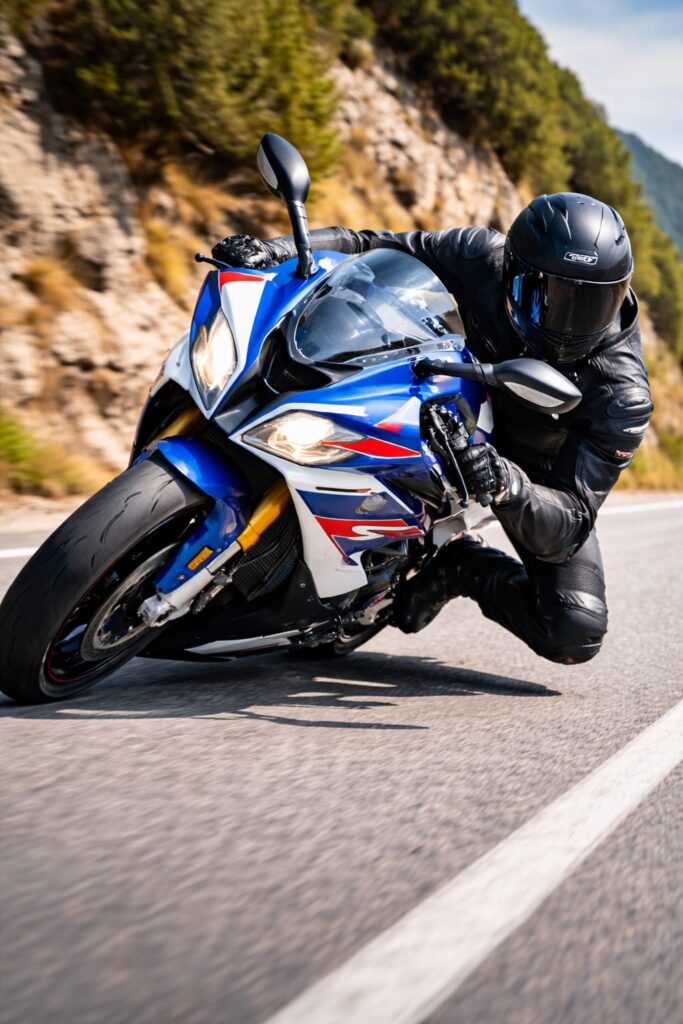
There is a tension at the heart of every litre-class superbike. On one end sits raw, uncompromising track performance — a machine that is fastest on a circuit but exhausting and demanding on the street. On the other end sits accessibility and comfort — a machine that anyone can manage but that feels blunt and uninspiring when you push it. Most manufacturers in this segment have spent years trying to find the middle of that range. The BMW S1000RR is the machine that comes closest to resolving the tension entire
bmw s1000rr engineers have probably thought primarily of the normal customer and not of racers in disguise. Because the S1000RR impresses with its high level of universality and perhaps sacrifices the last tenth of uncompromisingness for this — and that was a good decision. This makes the 205+ horsepower superbike rideable and controllable for a wide range of customers, both on the track and on weekend rides on the country road. This isn’t a criticism. It’s one of the most thoughtful engineering decisions in the segment. A race bike you can actually live with is worth infinitely more than a race bike you can’t.
In practical terms, this means the S1000RR in Road mode is genuinely manageable on public roads — the ShiftCam engine’s low-rev character, the DDC’s softer damping, and the Road-mode traction control calibration combine to create a motorcycle that doesn’t require absolute concentration at all times. Switch to Race Pro 3 mode and the same motorcycle becomes as focused and demanding as a proper circuit weapon. The breadth of that range — from civilised street touring to race-track precision — is genuinely unusual in a production superbike.
The one honest criticism: The S1000RR is incredibly firm on the road, even in the softer Road mode. Although it turns with impressive precision, the RR’s ride quality is on the harsher side of the spectrum. On the smooth surfaces of American interstates and canyon roads, this is manageable. On broken urban pavement, it’s unforgiving. If your primary riding environment is rough city streets, the S1000RR will remind you of its priorities regularly. On track, none of this matters — and that firmness
Racing Pedigree From Monza to Magny-Cours — How the Track Made the Road Bike Better
The BMW S1000RR was unveiled at the Monza round of the World Superbike Championship in May 2009 — a deliberate statement of intent that this was a racing machine first and a road bike second. The original prototype featured Öhlins FGR forks, full carbon race bodywork, and WSBK-spec Brembo brakes. That prototype has become a future classic in its own right, representing the moment BMW announced itself as a serious competitor in the most prestigious production-based motorcycle racing series in the world.
The relationship between the S1000RR road bike and the WorldSBK race programme has been continuous and productive since 2009. Every significant performance development in the race programme — aerodynamic packages, chassis geometry changes, engine mapping strategies, electronics calibration — feeds back into the production motorcycle’s development cycle. The M1000RR, launched in 2021 as BMW’s first M-branded motorcycle, exists specifically to homologate race-developed components for WorldSBK eligibility. Components developed for the M1000RR race bike — including the performance cylinder heads, the 58° throttle, the brake cooling ducts, and the updated winglets — have now filtered down to the standard S1000RR for 2025.
In 2024, BMW achieved the World Superbike Championship success they had been building toward since 2009, with a competitive season that validated the entire development programme. The 2025 S1000RR arrives with that racing success embedded in its specification — not as marketing, but as engineering. The brake cooling ducts in the front fender? Developed because race engineers needed them on the M1000RR to manage caliper temperatures at Donington and Magny-Cours. The 58° throttle? Developed because race riders needed faster, more precise throttle inputs at Assen. Every technical change on the 2025 road bike has a race-circuit rationale behind it.
S1000RR vs Ducati Panigale V4, Yamaha R1, Honda CBR1000RR-R — The Honest Breakdown
In 2025, the litre-class superbike segment contains several genuinely excellent machines. Dismissing any of them would be dishonest. The Ducati Panigale V4, Yamaha YZF-R1, Honda CBR1000RR-R Fireblade, and Kawasaki ZX-10R are all serious motorcycles with serious performance credentials. Understanding where the S1000RR wins, loses, and trades in this comparison is the foundation of an informed buying decision.
The Ducati Panigale V4S costs approximately $7,700 more than the S1000RR at comparable specification levels. The Panigale has the higher peak power figure (214+ hp from its V4 motor) and the more theatrical character — both sonically and in terms of pure aggression. It is, in many testers’ views, the more exciting motorcycle. It is also more demanding to ride well, less forgiving at the limit, and significantly more expensive to service and maintain. The S1000RR justifies the price gap with its ShiftCam engine’s broader usability, the DDC system’s adaptability, and the more complete standard electronics package at the base price.
The Honda CBR1000RR-R Fireblade SP is a more direct competitor in terms of price and philosophy. Honda’s approach is similar to BMW’s — a motorcycle designed to be excellent across a broad range of rider abilities, not just brilliant in the hands of an expert. The Fireblade SP has excellent Öhlins suspension as standard and is Honda’s finest superbike engineering in decades. The S1000RR counters with ShiftCam (which Honda has no equivalent for), DDC (Öhlins forks without electronic control), and the 2025 winglet upgrade. Both are excellent; the BMW’s technology advantage is real but the Honda’s reliability reputation is equally real.
| SPECIFICATION | BMW S1000RR | DUCATI PANIGALE V4 | HONDA CBR1000RR-R SP | YAMAHA YZF-R1M |
|---|---|---|---|---|
| Engine | 999cc Inline-4 ShiftCam | 998cc V4 | 999cc Inline-4 | 998cc Inline-4 CP4 |
| Peak Power | 205 hp | 214+ hp | 214 hp | 200 hp |
| Variable Valve Timing | Yes (ShiftCam) | No | No | No |
| Electronic Suspension | DDC Standard | Öhlins EAS 2.0 | Öhlins (non-electronic) | Öhlins ERS |
| Aerodynamic Winglets | 50.9 lbs DF @ 186mph | Yes (DRS system) | Yes | Limited |
| US Base Price | ~$17,895 | ~$25,595 | ~$16,599 | ~$27,399 |
| Race Quickshifter | Standard (all trims) | Standard | Standard | Standard |
| Wet Weight | 197 kg (434 lbs) | 195 kg | 201 kg | 200 kg |
The price comparison in the table above tells a compelling story. The S1000RR undercuts the Ducati Panigale V4 by approximately $7,700 at comparable trim levels. It undercuts the Yamaha R1M by approximately $9,500. At $17,895 base, the BMW offers a technology package — ShiftCam, DDC, Pro Riding Modes, bi-directional quickshifter, Race ABS, 50.9 lbs of downforce, brake cooling ducts — that competitors package at significantly higher prices.
The S1000RR as a Track Day Machine — Why It’s the Most Popular Choice at US Circuits
Walk through the paddock of any WERA, track day org, or high-performance riding school event at Road America, Laguna Seca, or Circuit of the Americas, and you’ll see more BMW S1000RRs than any other litre-class machine. This isn’t coincidence. It’s the product of a specific set of characteristics that make the S1000RR the most effective track day tool available at its price point — and in many cases at any price point short of a full race-prepared machine.
The DDC suspension system’s ability to switch between calibrations means track day riders don’t need to set up their bike separately for the drive to the circuit and the laps themselves. The GPS Lap Trigger means every session produces usable data without external equipment. The Race Pro 1/2/3 modes allow progressive adjustment of electronics as rider confidence builds during a day — starting with some electronic safety net in the morning session and reducing it as the track surface is learned and the ambient temperature rises. The Shift Assistant Pro means every upshift on the back straight is committed and clean, not tentative.
For American riders who invest in track days as a regular part of their riding life, the S1000RR’s connectivity via the BMW Motorrad Connected App is particularly valuable. Ride data from each session is stored and can be analysed on a smartphone post-session — braking zones, throttle inputs, lean angles, sector times. The level of self-coaching available through this data, without any additional hardware, is remarkable for a standard production motorcycle.
Track day economics: Despite being in a segment with the CBR1000RR-R Fireblade at a slightly lower base price, the S1000RR’s total cost of track day ownership is competitive. Standard Brembo hardware reduces the urgency of an immediate caliper upgrade. DDC suspension eliminates the immediate need for aftermarket shock and fork upgrades. The Race Pro electronics package is complete enough that most intermediate track day riders won’t need additional data logging hardware for years of development.
How to Buy a 2025 BMW S1000RR in the US — What to Know Before You Sign
The 2025 BMW S1000RR’s base US MSRP is approximately $17,895. That is the starting point, not the typical transaction price — BMW dealers have limited negotiating room on new S1000RRs compared to some competitors because demand consistently outpaces supply for this model, particularly for the M Package trim. Understanding what you’re buying before you walk into a dealership saves both time and money.
The most important buying decision with the S1000RR is not which colour to choose — it’s whether to take the M Package. The M Package adds DDC Dynamic Damping Control, M Forged Wheels, M Seat, M Endurance Chain, M GPS Lap Trigger, and the race-package electronics calibration. If you ride track days regularly, the M Package is not a luxury — it’s a functional upgrade that eliminates the need for several aftermarket modifications you’d otherwise be making in the first year of ownership. If you’re a primarily street rider, the base S1000RR with standard suspension is genuinely excellent and the M Package’s additions become more aesthetic than functional.
- Prioritise the Dynamic Package if you’re not getting the full M Package
- The Dynamic Package adds DDC to models that don’t include the full M Package. For any rider who uses the S1000RR on track, DDC is the single most impactful upgrade available within BMW’s options structure. The ability to switch between track and street damping calibrations with a button press is worth more than any aftermarket accessory at a comparable price.
- The Race Package adds features specific to circuit use
- Includes M GPS Lap Trigger, M Endurance Chain, and the race-calibrated electronics package. For regular track day participants, the M GPS Lap Trigger alone justifies the package cost by eliminating the need for a separate transponder or data logging system for basic lap timing and telemetry.
- TPM Tyre Pressure Monitor is worth adding
- Tyre pressure monitoring is not standard on the S1000RR; it’s an option that provides real-time pressure readings for both tyres. For track use, where tyre pressure management is part of session preparation, knowing your pressures before entering pit lane is genuinely useful. Street riders benefit equally — under-inflated tyres are the leading cause of premature tyre wear and handling degradation.
- Budget for BMW Ultimate Care and break-in service
- The S1000RR includes BMW’s Ultimate Care Break-In Service, which covers the initial 600-mile/6-month service. Beyond that, maintenance at BMW Motorrad dealerships is more expensive than generic independent mechanics — plan accordingly. An independent BMW specialist for out-of-warranty work can reduce annual costs significantly without compromising quality.
- Agreed-value collector insurance from the star
- tA new 2025 S1000RR is a premium asset that requires proper insurance. Standard auto-style motorcycle insurance may not adequately cover replacement value. Specialised motorcycle insurers — Hagerty, Markel, Dairyland — offer policies appropriate for performance bikes of this value, with track day coverage available as an add-on for riders who use their machines at circuits.
Why the BMW S1000RR Is Still the Reference Point
Sixteen years is a long time in motorcycle development. Sixteen years ago, the S1000RR arrived and immediately embarrassed the best Japan and Italy had to offer. Today, in 2025, it is still the motorcycle that others are measured against — not because it has the most power, not because it’s the most dramatic, but because it comes closest to resolving the fundamental contradiction of the litre-class superbike: how do you build a machine that is simultaneously the fastest, the most sophisticated, and the most usable?
205 horsepower from ShiftCam technology that doesn’t exist anywhere else in the segment. 50.9 lbs of aerodynamic downforce from M-specification winglets. DDC Dynamic Damping Control that makes the same motorcycle feel like a touring bike on Monday and a circuit weapon on Saturday. Brembo brakes with cooling ducts. Pro Riding Modes standard. Shift Assistant Pro standard. GPS Lap Trigger in the M Package. All of this, starting at $17,895 — thousands less than the Italian and Japanese competition at comparable specification levels.
 Sagar
Sagar